

Arctic fox
Vulpes lagopus
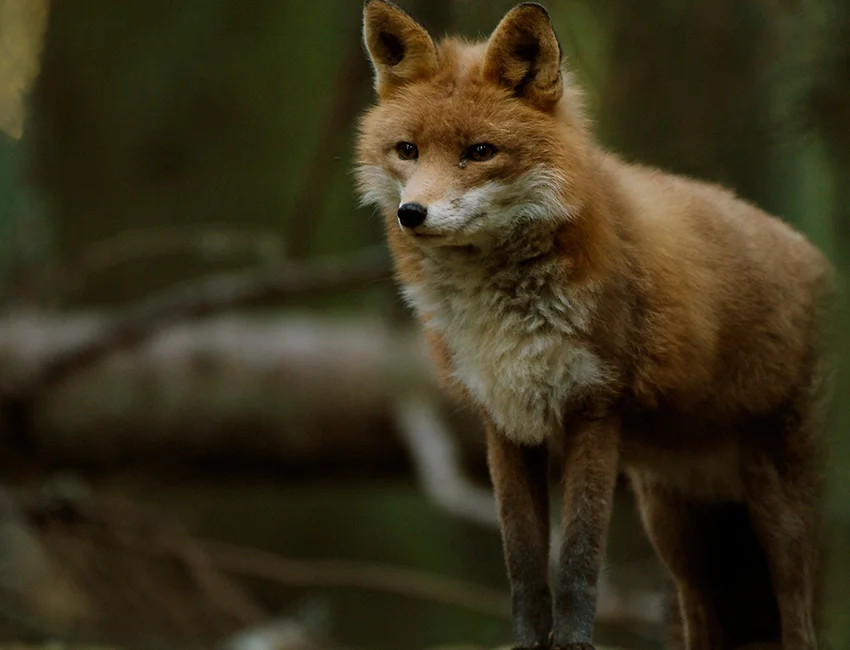
The Arctic fox is closely associated with the mountain environment and is exceptionally well adapted to the cold. While most people think of the Arctic fox as white — which many are in winter — there is also a blue-grey colour variant that keeps its darker coat all year round.
Today, the Arctic fox is considered highly endangered.
About
The Arctic fox was one of the first animal species to recolonize Scandinavia after the last Ice Age. Although they may look small and cute, they are remarkably tough and can survive extremely cold temperatures thanks to their dense fur.
The Arctic fox occurs in two different colour variants. One is white in winter and grey-brown in summer, while the other is steel blue during winter and dark brown in summer. They are superbly adapted to the harsh mountain climate — with thick winter coats and fur-covered paws, they can withstand temperatures as low as –40°C.
Arctic foxes primarily feed on lemmings and voles, but will eat almost anything they can find. They live in pairs, and the female takes care of the young.

Did you know that
The oldest known Arctic foxes in Sweden have lived to be 7–8 years old.
They are exceptionally well adapted to the cold — only when temperatures drop below –40°C do they need to generate extra body heat.
Facts
Scientific family: Canids (Canidae)
Conservation status: EN (Endangered)
Size: 50–85 cm in length, with a shoulder height of about 30 cm.
Weight: Normally 2.5–5 kg, but can reach up to 8 kg — the “extra weight” consists mainly of a thick layer of fat.
Number of young: The pups are born between May and mid-July. Litter size varies greatly, from 1 to 13 pups, but 5–10 is most common. In years with poor food availability, reproduction may not occur at all.

Conservation status