

Domestic reindeer
Rangifer tarandus domesticus
The reindeer has always been a central part of the Sami culture. At first, wild reindeer were hunted, but eventually the reindeer was domesticated and used for self-sustaining purposes. In modern times, domestic reindeer herding has developed into an industry focused on meat production, but reindeer still form an important part of the Sami culture.
About
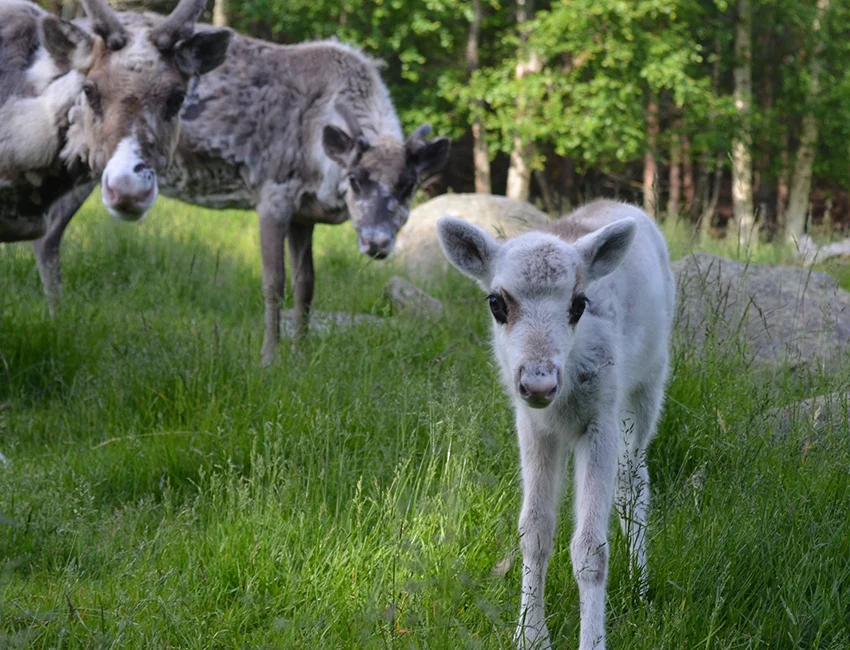
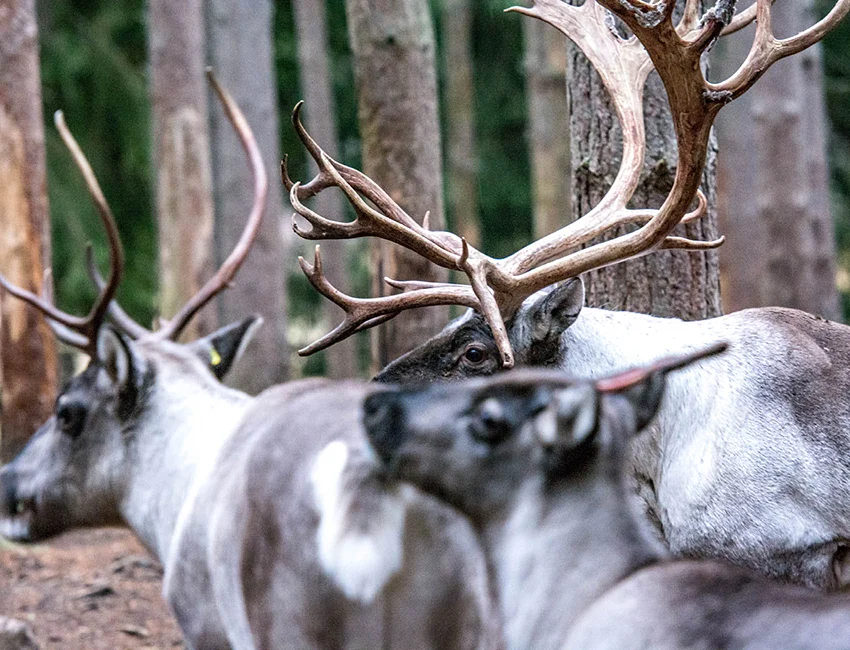
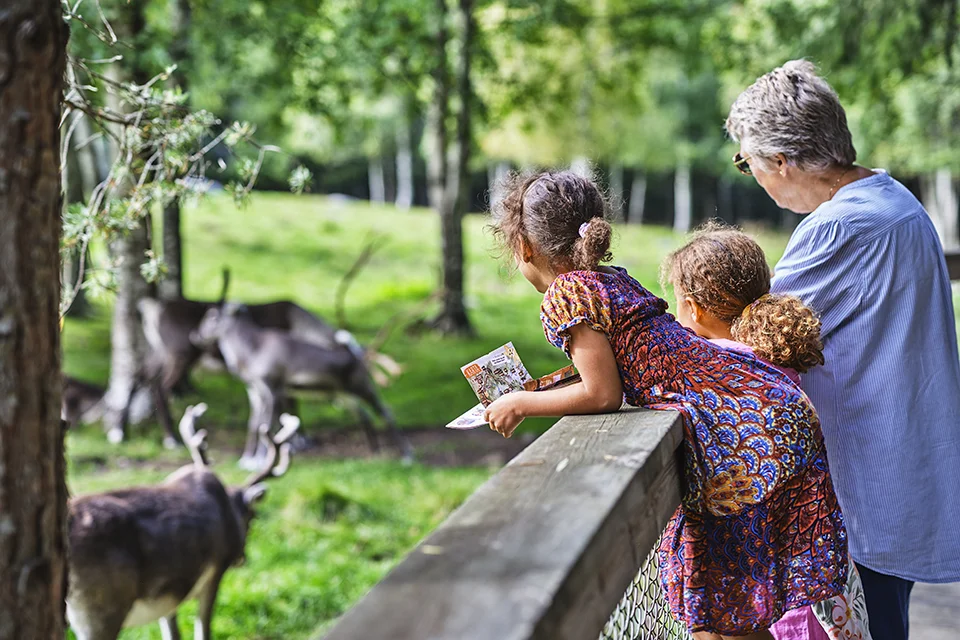
This reindeer is a domesticated form of the mountain reindeer but is smaller than the forest reindeer. They are usually grey with lightly coloured legs but can be other colours some are totally white. They eat herbs, grass and brushwood in summer and lichen in winter. The Sami reindeer live in groups just like wild reindeer and they travel between different areas when searching for food.
Today, there are approximately 250,000 domesticated reindeer in Sweden, all of which graze freely in the northern parts of the country. The reindeer is one of the most versatile domesticated animals. When alive, reindeer serve as draft and pack animals, and the females can also be milked. A slaughtered reindeer provides not only meat but also horns and bones for crafts, blood, tendons for sewing, hides and leather, and stomachs for containers. Today, the reindeer industry faces many threats. Climate changes result in poorer grazing opportunities and an increase in parasites, predators take a significant number of reindeer, and mines, roads, snowmobiles, and hunting disrupt the reindeer’s grazing lands and their essential grazing peace.

Fact
Class: Even-toed ungulates (Artiodactyla)
Scientific name: Rangifer tarandus domesticus
Conservations status: LC
Size: The shoulder height can vary between 90-140 cm and the length is 120-230 cm.
Weight: Male (called bull or sarv) 70 – 150 kg. Female (called cow or vaja) 40 – 100 kg.
Number of youngs: 1
Conservation status