

The northern hawk owl
Surnia ulula
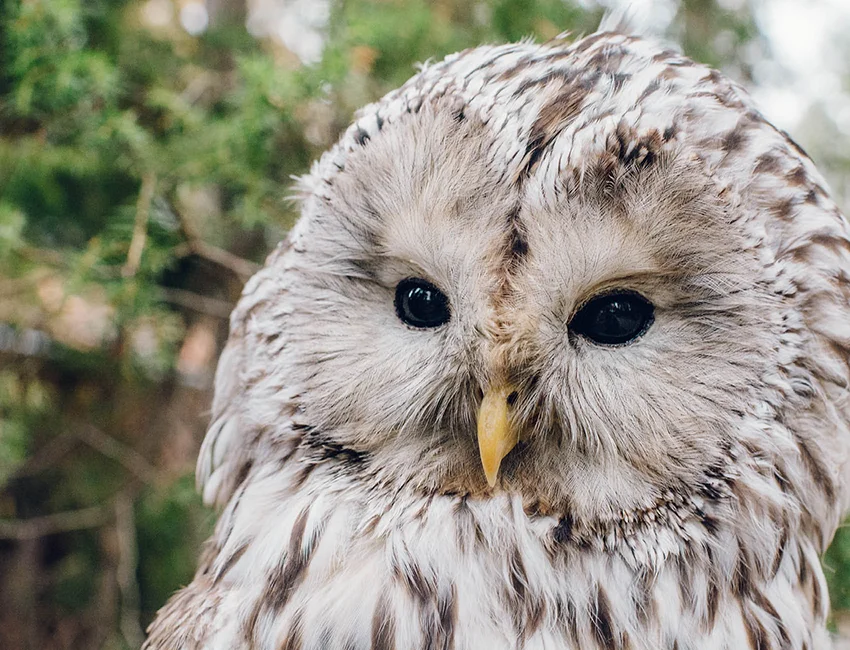
The Northern hawk-owl got its name by its reminiscence of a hawk with its cross-striped breast, long tail and narrow wings.
About:
With its cross-banded chest and sleek silhouette, it’s easy to see how the northern hawk owl got its name. It not only resembles a hawk but also hunts during the day, unlike most other owls. It is often seen perched at the top of a tree, scanning the ground below for prey.
Hawk owls live in pairs, but the female alone incubates the 3–10 eggs while the male hunts and keeps watch nearby.
Despite its relatively small size, the hawk owl will not hesitate to defend its nesting area—even against humans who venture too close. The species is nomadic, moving to areas where food is plentiful. It usually inhabits the northern parts of the country, but in some years many individuals wander far south, likely when food becomes scarce.

Facts
Family: True owls (Strigidae)
Scientific name: Surnia ulula
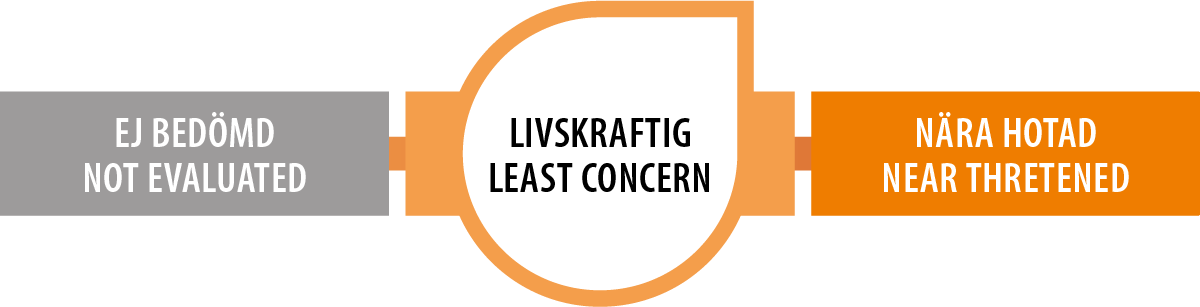
Conservation status: Least Concern (LC)
Size: 36–40 cm in length
Weight: 280–380 g
Number of eggs: 3–10
Did you know that
The name Northern hawk owl was first used in 1824. Earlier, around 1807, the species was known as the Eurasian sparrowhawk owl.

Conservation status