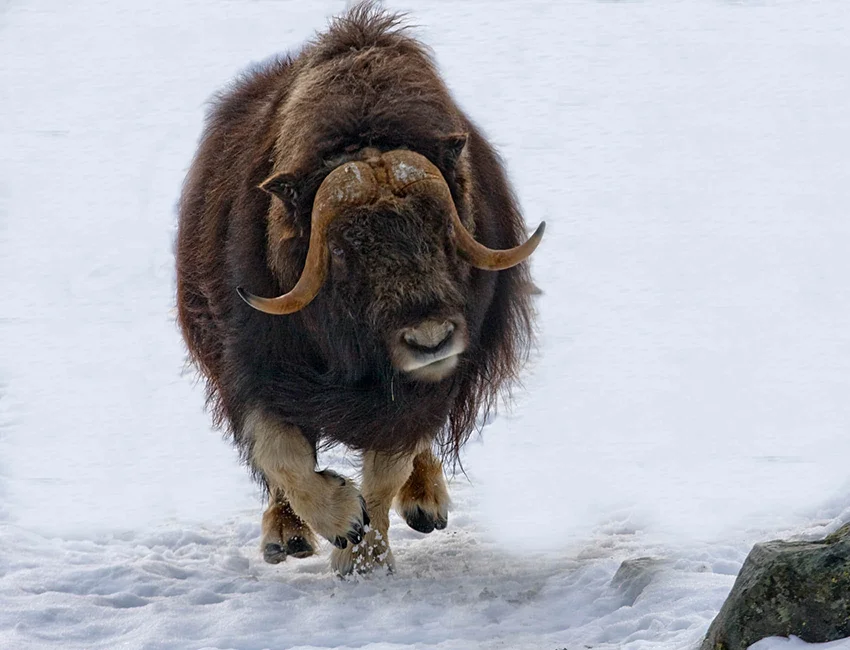


The moose
Alces alces
The moose is called the King of the Forest and it is perhaps not strange because it is our country’s absolute largest animal – and by far the largest deer animal in the world. The bulls’ impressive crowns certainly contribute to the name as well. We have chased the moose in ancient times, and it has become something of a national symbol for Sweden. Even today, moose hunting is a big part of our country.
About
Humans have hunted moose since ancient times, and today this majestic animal is a national symbol of Sweden. Many visitors travel here hoping to catch a glimpse of it in the wild.
An adult moose weighs between 200 and 550 kilograms and can reach up to two meters in height. Each year, the male sheds his antlers, which grow back in time for the next mating season.
Although moose are often described as brown, their coat color varies from dark brown and almost black to light brown or grey. Their legs are always pale grey-white. Moose feed on grasses, herbs, twigs, and needles from trees and shrubs. They are solitary animals, and the female raises her calves on her own. Mating occurs in autumn, and the calves are born in early summer.

Did you know that
They rut for only one day, and if the female is not mounted during that time, she will come into heat again after about three weeks.
In the 19th century, the moose was almost extinct in Sweden and was placed under legal protection.
In the past, people believed that moose were unable to lie down.
Between 72 and 93 percent of moose deaths are caused by hunting. Other common causes include traffic accidents and natural predators.
The moose also has an excellent sense of hearing.
Fact
Scientific name: Alces alces
Conservation status: Least Concern (LC)
Size: Body length 200–290 cm; shoulder height 180–210 cm for bulls and 150–180 cm for cows
Weight: Bulls 320–450 kg (occasionally over 500 kg); cows 250–375 kg
Number of young: 1–2, sometimes 3
Conservation status