

The tawny owl
Strix aluco
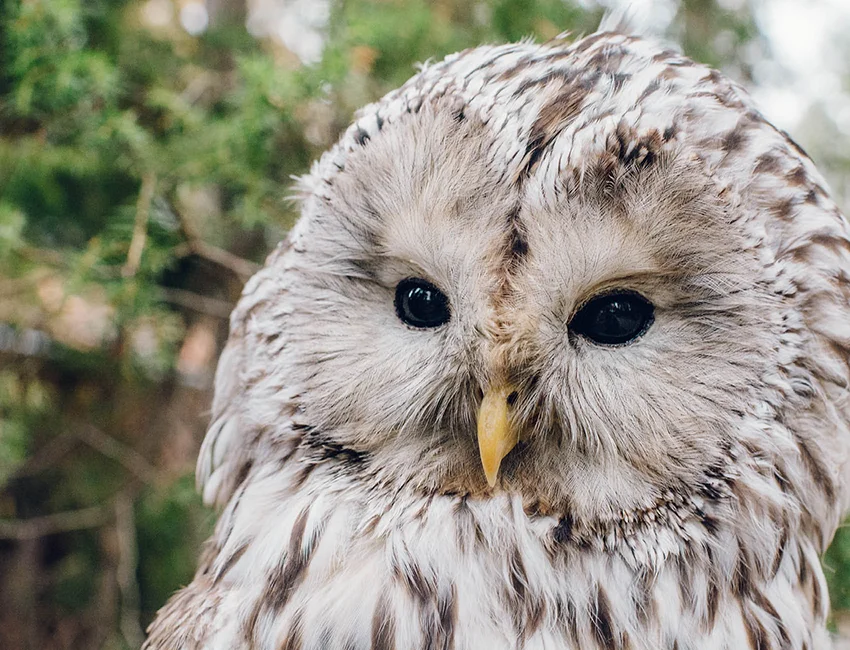
The tawny owl is a very night-active owl that sits close to the trunk of a dense spruce during the day. The tawny owl’s sound is the one that most people mimic when they try to sound like an owl.
About:
The tawny owl is the most common owl species in Sweden. It is mainly active at night and spends the day resting close to the trunk of a dense spruce tree. Its call is the same familiar hooting sound that most people associate with owls. Tawny owls have a pale underside with dark streaks and are either brown or grey on the upper parts. Their wingspan can reach up to one metre.
They have a varied diet, feeding mainly on small rodents and birds, but also on frogs, lizards, insects, and worms. Tawny owls usually mate for life, with the female alone incubating the eggs. They nest in tree cavities or nesting boxes.

Fact
Scientific name: Strix aluco
Conservation status: Least Concern (LC)
Size: 37–39 cm long; wingspan 94–104 cm
Weight: 500–700 grams
Number of eggs: 3–5
Did you know that:
The highest recorded age of a tawny owl in the wild is 18 years, but in captivity it can live up to 27 years.
According to old Swedish folklore, the call of the tawny owl was believed to foretell a change in the weather — or even death, if it was heard screaming at night near a house.

Conservation status