

The great grey owl
Strix nebulosa
The great grey owl is one of our biggest owls. It can be found mostly in the northern parts of the country, but it also occurs in the middle part, and at times in southern Sweden.
About:
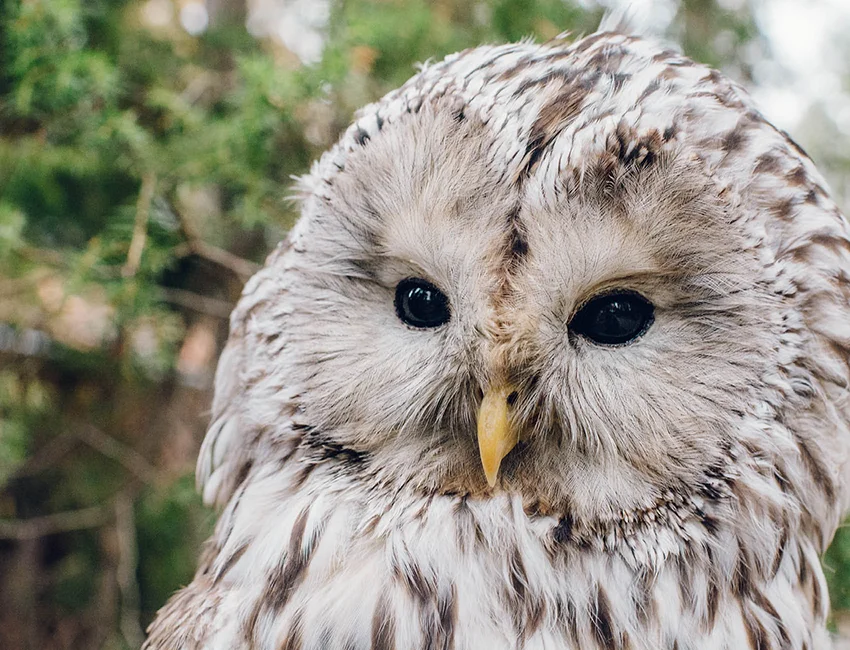
A large grey owl with striking yellow eyes, the great grey owl has a wingspan of 135–160 cm and a body length of nearly 70 cm. Its plumage is grey, and it has a proportionally large, round head. The facial disc shows fine grey rings surrounding the small yellow eyes and a pale yellowish beak.
The great grey owl mainly feeds on small rodents. It prefers to fly low over open areas while hunting—such as forest clearings, power line corridors, and meadows—where it has a clear view of its prey.
These owls live in pairs. The female incubates 2–6 eggs on her own, and the chicks are ready to fly at around two months of age. Great grey owls do not build their own nests but typically take over abandoned nests from other birds of prey.

Did you know that:
In recent decades, an increasing number of known breeding attempts have taken place in nests built specifically by humans. In many areas, these artificial nests have replaced the natural twig nests and tree stumps that were lost due to logging.
Facts
Scientific name: Strix nebulosa
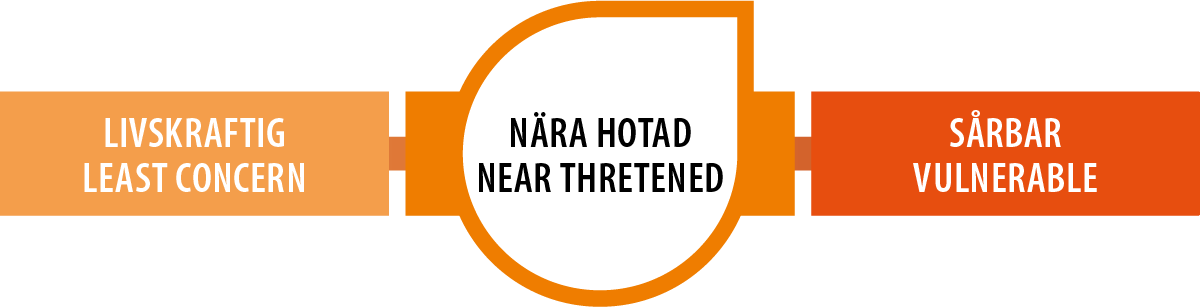
Conservation status: Near Threatened (NT)
Size: One of the largest owl species, measuring 65–70 cm in length with a wingspan of up to 158 cm. Much of its impressive size comes from its thick, fluffy plumage rather than body mass.
Weight: 900–1,200 g
Number of eggs: 2–6

Conservation status